
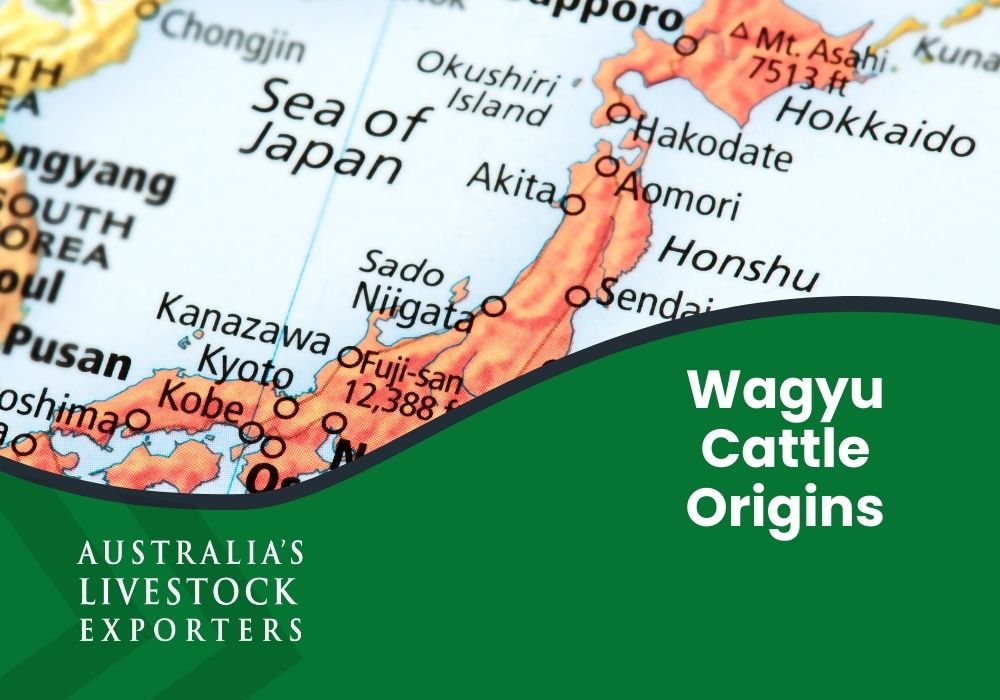
How a Japanese breed became global
Wagyu cattle are now recognised as one of the most sought-after breeds in the world, prized for their unique genetics, adaptability and commercial value. But long before Wagyu became a cornerstone of premium beef programmes or international breeding herds, the breed evolved in Japan through centuries of selective development.
Today, Australia holds one of the world’s largest and most advanced Wagyu populations, supplying genetics and breeding cattle to global markets.
This article explores the origins of the Wagyu breed, how it left Japan, its journey into Australia and the United States, and how the global Wagyu cattle market is shaping international demand.
Where Wagyu cattle come from
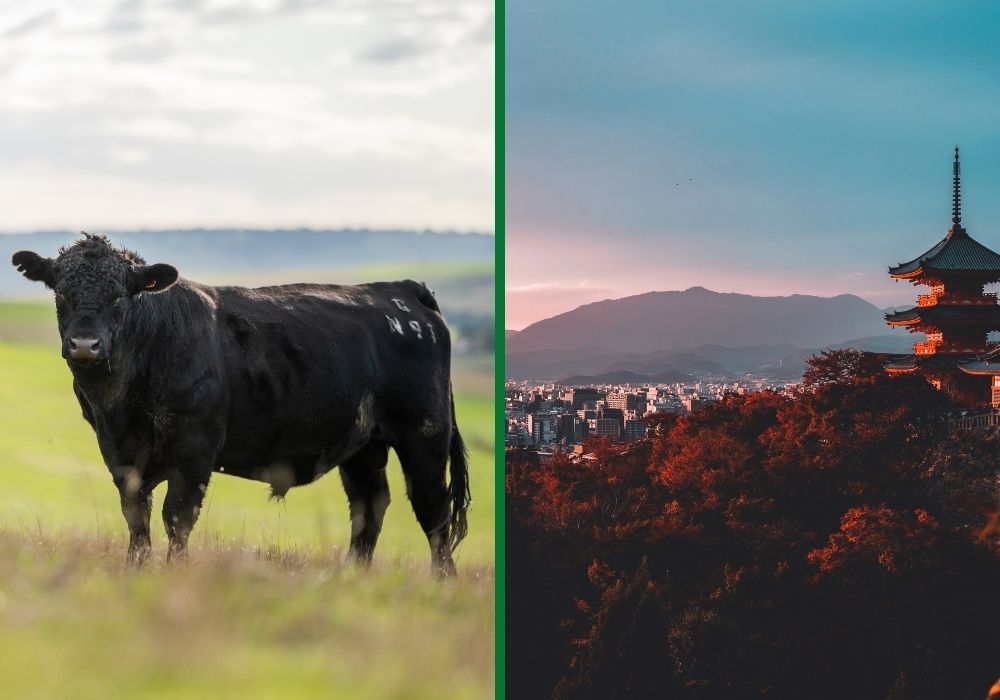
A brief history
The term Wagyu translates to ‘Japanese cattle’ (Wa = Japanese, gyu = cow). Unlike many modern cattle breeds, Wagyu developed in relative isolation for hundreds of years.
Origins in Japan
Historical and archaeological evidence suggests that domesticated cattle first arrived in Japan from mainland Asia during the Yayoi period, around the 2nd to 3rd century AD.
These animals were not Wagyu as we know them today.
Instead, they were early East Asian taurine cattle, genetically similar to ancient cattle populations found in Korea, Northern China, and coastal regions of Southeast Asia.
These early cattle belonged to the broader species Bos taurus, but they were not yet divided into structured breeds. Japan’s strict geographic isolation allowed these imported cattle to slowly diverge into region-specific cattle types, which many centuries later formed the foundation of the four recognised Wagyu breeds.
For most of Japan’s history, cattle were used primarily as draught animals in agriculture, not as meat animals. This long period of working use encouraged desirable traits such as:
- endurance
- docility
- ability to deposit intramuscular fat for sustained energy
By the late 19th and early 20th centuries, regional cattle populations began to stabilise into the four recognised Wagyu breeds.
The four Japanese Wagyu breeds
Japan officially recognises four Wagyu breeds:
- Japanese Black (Kuroge Washu) – over 90% of all Wagyu; foundation of global herds
- Japanese Brown (Akage Washu)
- Japanese Shorthorn (Nihon Tankaku Washu)
- Japanese Polled (Mukaku Washu)
Of these, Japanese Black is the dominant breed exported internationally, forming the entire basis of Australia’s fullblood Wagyu herd.
How Wagyu genetics left Japan
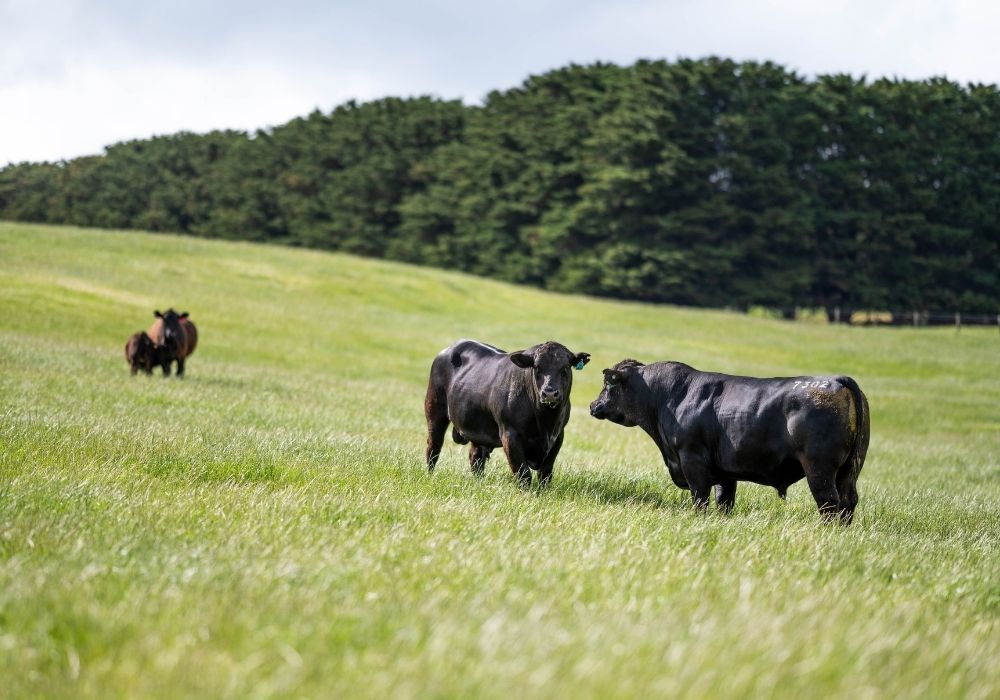
Japan tightly regulates cattle exports today, but in the 1970s–1990s a small number of animals were legally exported.
Key export movements
According to the Australian Wagyu Association (AWA):
- Around 220 Wagyu cattle were exported from Japan during this period
- These animals were primarily Japanese Black, with a mixture of Tajima, Kedaka/Tottori and Shimane bloodlines.
- They were shipped first to the United States and, through a series of structured programmes, later to Australia and other countries.
United States
In the 1970s and 1990s several shipments of fullblood and crossbred Wagyu arrived in the US. These cattle formed the backbone of today’s American Wagyu Association herds.
Australia
Australia imported Wagyu genetics from both Japan and the US between the 1990s and early 2000s. Strict quarantine protocols applied, including temporary stationing in third countries before arrival.
The growth of Australia’s Wagyu industry
Australia is now considered one of the global leaders in Wagyu breeding genetics.
According to AWA (2023–2024 reports):
- The Australian herd has grown from 220 foundation animals to more than 400,000 registered Wagyu.
- Australia manages the largest Wagyu-specific genetic evaluation in the world, covering cattle from over 40 countries.
- Australia is the largest exporter of Wagyu beef by value, meaning breeding stock are continuously selected based on commercial performance.
- Australia is also a significant exporter of Wagyu cattle.
- Genomic testing is widely adopted, with thousands of Wagyu animals DNA-tested each year.
This makes Australia a reliable source of:
- Fullblood Wagyu breeding cattle
- Semen and embryos
- Feeder cattle for international supply chains
Australia’s climate diversity also supports the development of Wagyu suited to tropical, arid and temperate production systems. This makes them attractive for buyers in the Middle East, Asia and North America.
The global state of the Wagyu cattle market
United States
The US maintains one of the largest Wagyu-influenced herds outside Japan. The American Wagyu Association reports consistent growth in both fullblood and crossbred registrations, driven by premium market demand and strong feedlot integration.
Japan
Japan maintains the world’s most tightly controlled Wagyu registry, with prefectural breeding programmes and deep regional identity. Exports of live animals remain prohibited today.
Australia
Australia leads global Wagyu genetic exports due to:
- A large, diverse fullblood gene pool
- Advanced genomic evaluation
- Strong export infrastructure
- Proven commercial performance data
Middle East & GCC
Demand is rising for:
- Heat-adapted Wagyu genetics
- Long-fed feeder cattle
- Breeding stock to establish local Wagyu herds
UAE, Saudi Arabia and Qatar have reported increasing investment in domestic genetics and food security initiatives.
Asia
Indonesia, Malaysia, China and Vietnam all maintain growing Wagyu programmes, often relying on Australian or American genetics.
Why Wagyu genetics matter to international breeders
For global breeding programmes, the value of Wagyu cattle lies in:
- Unique marbling genetics
- High heritability of desirable traits
- Predictability when using fullblood sires
- Strong commercial premiums
- Suitability for AI and embryo-transfer systems
For buyers of breeding stock, semen or embryos, understanding Wagyu origins helps ensure better selection decisions and long-term herd performance.
Frequently Asked Questions (FAQ)
What is the origin of the Wagyu breed?
The Wagyu breed originated in Japan, where native cattle were selectively bred for centuries for strength, endurance and intramuscular fat.
These regional cattle later formalised into four recognised Wagyu breeds: Japanese Black, Japanese Brown, Japanese Shorthorn and Japanese Polled.
How did Wagyu cattle leave Japan?
Wagyu cattle left Japan through a small number of legal exports between the 1970s and 1990s, when around 220 fullblood animals were shipped to the United States and later used to establish breeding herds in Australia and other countries.
Why did Japan stop exporting Wagyu?
Japan stopped exporting Wagyu cattle to protect its national genetic resources and preserve the purity of its traditional breeds.
After small, legally approved exports in the 1970s–1990s, the Japanese government classified Wagyu genetics as a cultural and agricultural asset.
Live animal exports were banned to prevent the loss of elite bloodlines, maintain strict herd registries and protect Japan’s premium beef industry.
Today, no live Wagyu exports are permitted under Japanese law, and only a limited amount of processed beef leaves the country.
Why is Australia a world leader in Wagyu genetics?
Australia is a world leader in Wagyu genetics because it has one of the largest fullblood herds and the most advanced Wagyu genomic evaluation system.
The Australian Wagyu Association analyses more than 400,000 animals, providing accurate breeding values supported by commercial performance data.
Why is Wagyu gene pool small?
The Wagyu gene pool is small because only about 220 fullblood Wagyu cattle were ever exported from Japan before export bans were introduced.
These animals—mostly Japanese Black from Tajima, Shimane and Kedaka/Tottori lines—formed the foundation herds in Australia, the United States and other countries.
Since Japan no longer allows live exports, global fullblood populations can only expand through breeding, AI and embryo transfer from this limited group. This bottleneck makes bloodline diversity management crucial in all international Wagyu breeding programmes.
What are the main Wagyu bloodlines used outside Japan?
Most international Wagyu herds are based on Japanese Black bloodlines, particularly Tajima for marbling, Shimane/Itozakura for growth and carcase weight, and Kedaka/Tottori for frame and maternal traits.
Can Wagyu cattle thrive in hot climates such as the Middle East?
Yes — Wagyu cattle can thrive in hot climates, including the Middle East, due to their adaptability and the performance of Australian bloodlines in arid and humid regions.
Selecting heat-tolerant lines helps maintain growth and fertility in challenging environments.
How can international buyers import Wagyu breeding cattle or genetics from Australia?
International buyers can import Wagyu cattle or genetics by selecting suitable animals, meeting import health requirements and completing quarantine and freight arrangements.
Exporters such as ALE manage sire and dam selection, veterinary testing, documentation and logistics for breeding cattle, semen and embryos.
Contact us for minimum livestock export quantities and for help in importing Wagyu cattle into your local market today.