Wagyu Breeds, Bloodlines and Genetic Technologies Explained
Wagyu cattle are internationally recognised for producing some of the most highly marbled beef in the world. Wagyu breeds and Wagyu genetics are the foundation of this premium beef quality, making them essential for producers and buyers seeking consistent results from Wagyu breeding programs.
The term Wagyu refers to a group of cattle breeds originally developed in Japan. Each Wagyu breed carries genetic traits that influence marbling, fat composition, growth performance, and carcass quality.
Today, Wagyu breeding programs in countries such as Australia use these genetics to produce premium beef and develop high-value cattle herds.
Looking to Source Premium Australian Wagyu Cattle?
Make a trade enquiry with ALE.
Is Wagyu a Breed of Cattle?
The word Wagyu translates directly from Japanese as “Japanese cattle.” Rather than describing a single breed, Wagyu refers to several cattle breeds developed in Japan.
There are four recognised Wagyu cattle breeds:
- Japanese Black
- Japanese Brown
- Japanese Shorthorn
- Japanese Polled
Each breed has distinct genetic characteristics that influence growth performance, carcass quality, and marbling potential.
To understand how Wagyu cattle developed, see our guide to Wagyu cattle origins.
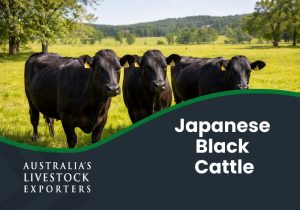
Among these breeds, Japanese Black cattle dominate Wagyu beef production and form the genetic foundation of most Wagyu breeding programs worldwide.
The Four Wagyu Breeds
Japanese Black
Japanese Black cattle are the most widely recognised Wagyu breed and are known for their ability to produce extremely high levels of intramuscular marbling. These genetics are responsible for the premium eating quality associated with Wagyu beef.
Japanese Brown
Japanese Brown cattle, sometimes called Red Wagyu, are known for balanced carcass traits, good growth performance, and leaner beef compared with Japanese Black cattle.
Japanese Shorthorn
Japanese Shorthorn cattle are traditionally raised in northern Japan and are adapted to grazing systems. Their beef typically contains lower marbling but strong flavour.
Japanese Polled
Japanese Polled cattle are the rarest Wagyu breed. Although they represent a small proportion of Wagyu cattle today, they remain one of the recognised Wagyu breeds.
How Wagyu Genetics Influence Beef Quality
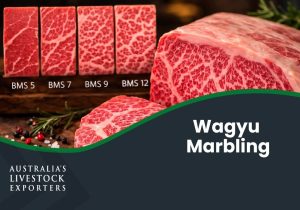
Wagyu cattle are valued for their genetic ability to produce high levels of intramuscular fat, commonly known as marbling.
Marbling contributes to several important eating quality traits, including:
- tenderness
- flavour
- juiciness
- texture
Wagyu genetics also influence fat composition and carcass consistency, helping producers achieve reliable beef quality.
Because of these characteristics, Wagyu genetics are widely used in breeding programs aimed at producing premium beef.
Key Wagyu Bloodlines
Within Wagyu breeding systems, several bloodlines play an important role.
Tajima
The Tajima strain is known for producing extremely high marbling and fine muscle structure.
Shimane
Shimane cattle contribute strong maternal traits and larger frame size.
Kedaka
Kedaka bloodlines are valued for growth performance and structural strength.
Modern Wagyu breeding programs often combine these bloodlines to balance marbling performance with growth and fertility.
Australia’s Genomic Engine – 400,000+ Wagyu in a Single Evaluation
One of the biggest reasons Australian Wagyu genetics stand out is the scale and sophistication of the data behind them.
- The AWA reports that its Wagyu database now includes more than 400,000 individual animals, with performance records across carcase, growth, fertility and structural traits.
- Recent upgrades mean the evaluation incorporates over 300,000 genomic profiles (DNA tests), allowing very accurate breeding values for key traits.
- Data is drawn from herds in more than 40 countries, making it the largest dedicated Wagyu genetic analysis in the world.
The AWA is now rolling out the next generation of Wagyu Breeding Values (WBVs) using a single-step genomic model that evaluates all traits together. This approach improves accuracy, especially for young animals, and gives breeders the confidence to select sires and dams earlier in life.
For buyers, this means you can evaluate Wagyu genetics using objective performance data—such as marbling, growth, and fertility—rather than relying only on pedigree or appearance.
AI and embryo transfer – multiplying elite Wagyu bloodlines
Because fullblood Wagyu cattle are scarce and valuable, breeders use artificial insemination (AI) and embryo transfer (ET) to rapidly multiply elite Wagyu genetics.
These technologies allow breeders to:
- Spread elite Wagyu sires across multiple herds
- Produce more fullblood calves from high-value donor cows
- Export Wagyu embryos and semen to global breeding programs
- Combined with genomic testing, AI and ET help identify cattle with superior genes for marbling, growth and fertility.
For buyers, this means access to elite Wagyu genetics through semen, embryos and breeding stock developed using AI, embryo transfer and genomic selection.
How ALE Connects Buyers with Australian Wagyu Genetics
Australia’s Livestock Exporters (ALE) helps international buyers access premium Australian Wagyu genetics suited to their climate, feeding system and market.
ALE can:
- Source Fullblood and Purebred Wagyu breeding cattle from leading Australian herds
- Supply Wagyu semen and embryos supported by AWA breeding values and genomic data
- Provide Wagyu feeder cattle for premium beef programmes
- Manage export logistics, including quarantine, health certification and welfare compliance
ALE works with governments, investors and producers across the UAE, Saudi Arabia, GCC, China and South-East Asia to source high-quality Wagyu genetics and breeding stock.
Looking to Source Premium Australian Wagyu Cattle?
Make a trade enquiry with ALE.
Frequently asked questions
What are the main Wagyu bloodlines used in Australian herds?
Australian Wagyu herds are built on three key bloodlines: Tajima, Shimane/Itozakura and Kedaka/Tottori.
- Tajima – very fine marbling, premium eating quality.
- Shimane / Itozakura – strong growth and carcase weight.
- Kedaka / Tottori – frame, structure and maternal traits.
Breeders combine these bloodlines to balance marbling, growth, fertility and adaptability. ALE works with herds that provide clear bloodline breakdowns and AWA breeding values so buyers know exactly what they are getting.
Why are Australian Wagyu genetics in such high demand worldwide?
Australian Wagyu genetics are highly sought after because they combine proven Japanese bloodlines with the world’s largest Wagyu genomic database.
Australia evaluates 400,000+ Wagyu across 40+ countries, giving buyers accurate predictions for marbling, growth and fertility.
Australia is also the largest exporter of Wagyu beef by value, proving these genetics in commercial markets. When you import through ALE, you access an industry already supplying premium brands across Asia and the Middle East.
What is a fullblood Wagyu breeder, and how is it different from crossbred Wagyu?
A fullblood Wagyu is a pure Wagyu animal with no outside breed influence, while crossbred Wagyu contain Wagyu genetics mixed with breeds such as Angus.
Fullbloods have DNA-verified ancestry tracing entirely to Japanese Wagyu and deliver the highest marbling predictability.
Crossbreds (F1, F2, F3 etc.) can produce excellent beef but do not offer the same level of breed purity.
For long-term herd building, importing fullblood genetics through ALE is usually the preferred approach.
How does genomic testing improve Wagyu breeding decisions?
Genomic testing improves Wagyu breeding by predicting marbling, growth, fertility and carcase traits with far greater accuracy.
It analyses thousands of DNA markers and integrates them with pedigree and performance data through AWA evaluations. This helps breeders select young animals confidently, reduce inbreeding and identify elite genetics earlier.
ALE prioritises sourcing fullblood sires and dams backed by genomic data.
Are Australian Wagyu suitable for hot climates such as the UAE and wider GCC?
Yes — Australian Wagyu perform well in hot climates because many bloodlines have been selected in Australia’s arid and humid regions.
Their adaptability is demonstrated by strong commercial numbers on feed even in regions with challenging summers.
ALE sources lines already proven in hotter environments and provides management advice for achieving high marbling in desert and tropical climates.
How can I import Australian Wagyu genetics or breeding cattle through ALE?
You can import Australian Wagyu through ALE by selecting suitable genetics, meeting import health requirements and completing quarantine and transport processes.
ALE manages sire/dam selection, documentation, veterinary testing, quarantine, export health certificates and air/sea freight.
Most shipments take 4–8 weeks once permits are issued. Buyers can start the process by submitting a trade enquiry with us.
References
- Australian Wagyu Association (AWA) https://www.wagyu.org.au/
- Beef Central https://www.beefcentral.com/
- Blackmore Wagyu – Bloodline Information https://www.blackmorewagyu.com/
- Wagyu Evolution https://www.wagyuevolution.com/
- Wagyu International https://www.wagyuinternational.com/
- Roca Law Wagyu – Breed Classifications https://www.rocalawwagyustud.com/
- Meat & Livestock Australia (MLA) – Live Export Statistics https://www.mla.com.au/
- Destination Wagyu – Wagyu Breed Overview https://www.destinationwagyu.com/